DATA ENGINEERING / ETL
AD-HOC MEDICAL DATA PROCESSING
Data work shaped around a platform that already exists.
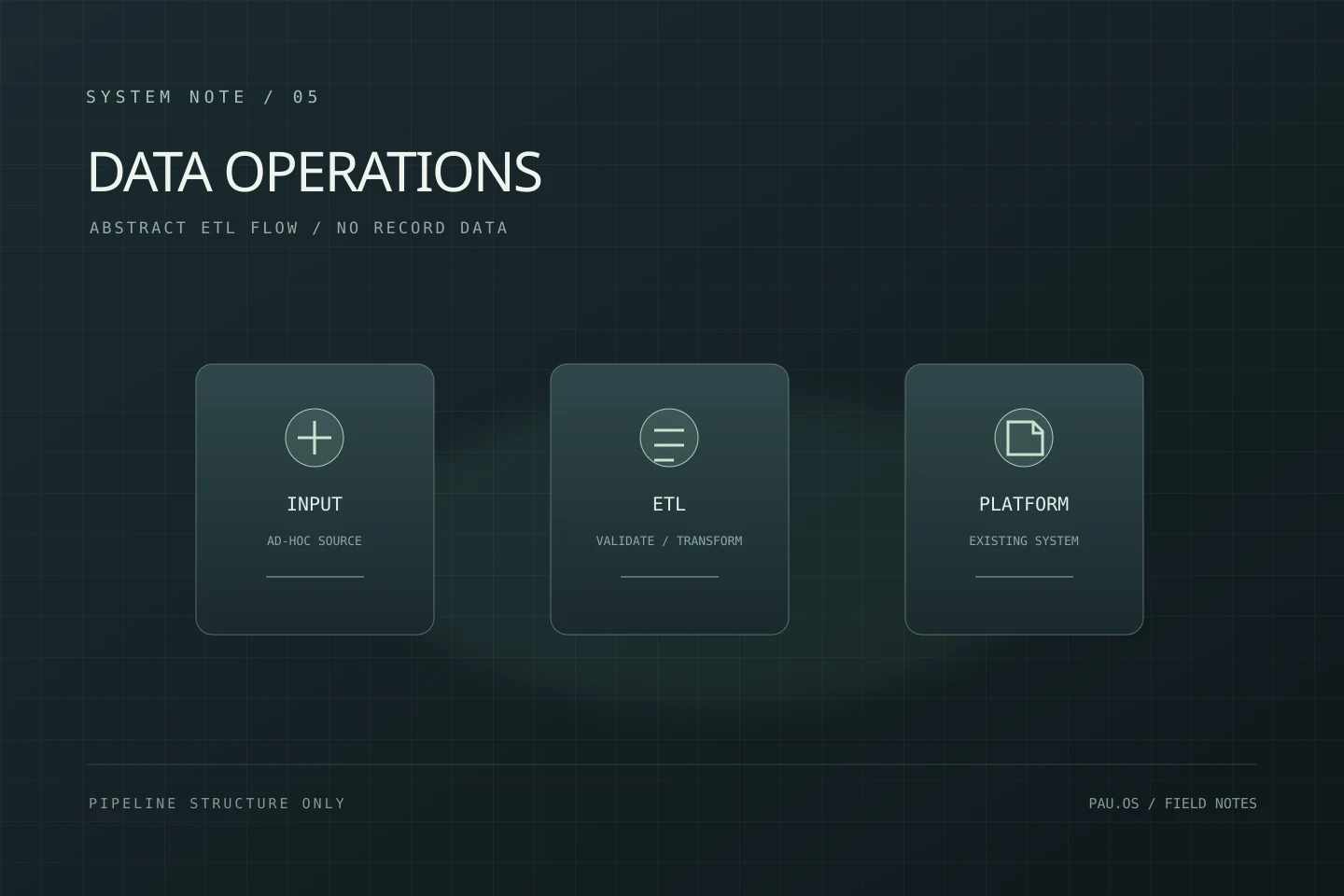
01 / THE PROBLEM
Connecting specialist workflows to existing platforms.
Ad-hoc data processing has to fit the contracts and constraints of an existing platform. The challenge is to bridge one-off workflows and established systems.
02 / THE APPROACH
How the system fits together.
The project is described in the GitHub profile as medical data processing and platform integration. Its public source tree shows a Python-led ETL structure with configuration, ingestion, pipeline and backend folders, supported by C, JavaScript, PowerShell and shell tooling. This page summarizes the stated scope and repository structure only.
Ad-hoc source processing → Python ETL
Input handling → ingestion module
Schema and settings → configuration
Existing platform → integration boundary
03 / ENGINEERING DECISIONS
Fit a workflow to an existing platform
The pinned project focuses on processing data for integration with an established data platform, using a mixed-language toolchain around a Python-heavy ETL codebase.
Keep example data out of the portfolio
PAU.OS contains no medical records or sample payloads. The case study uses an original abstract diagram and avoids reproducing source data.
CURRENT SCOPE
The public repository currently contains a tracked environment file with a credential-shaped database connection value and bundled data files. The repository link is withheld until those files receive a secrets and privacy review. No values or medical records were copied into PAU.OS.